
What are these “reclaimed” metal plates?
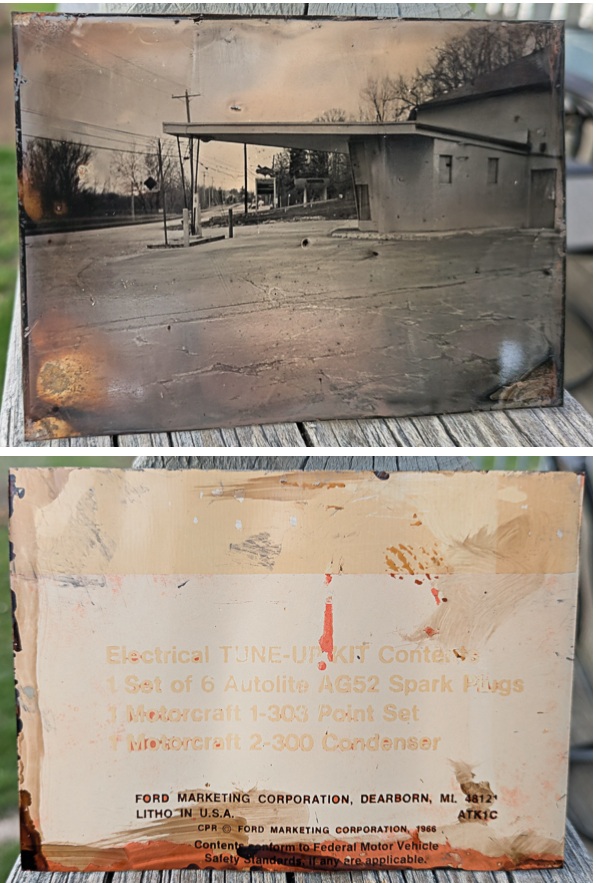
The process of creating reclaimed metal plates from old automotive fluid cans, and then making an image of a former gas station nearby.
One of the most interesting aspects of wet plate photography, at least for me, is the ability to make images on a variety of surfaces.
Traditionally, 19th-century wet plate photographers used metal plates called ferrotypes, commonly known today as tintypes, as well as glass plates called ambrotypes.
Modern wet plate artists sometimes experiment with whatever metal they can find. For me, with my love of automotive photography, it felt natural to create images of cars on pieces of automobilia.
This includes things like vintage metal oil cans, carb cleaner cans, WD-40 cans, and other garage ephemera. I can also create plates from vintage body panels. I keep a selection of metal cut from old hoods, fenders, and doors.
If you’re restoring or modifying a car and have some scrap sheet metal left over, we may even be able to turn a piece of your own car into a photographic plate.
Preparing the metal
Getting these materials into a shootable state is a bit of a process.
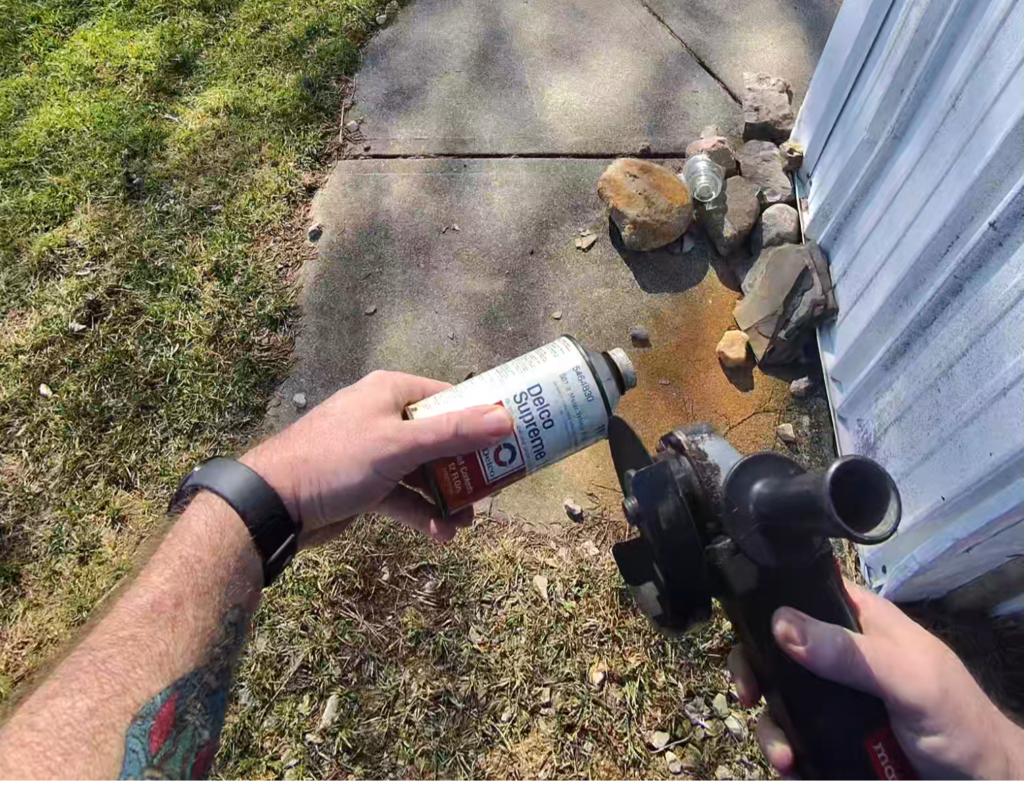
I source vintage cans from antique stores and online marketplaces. Body panels usually come from junkyards or local sales. Some modern cans come straight from fluids I use in my own garage, or from local repair and restoration shops.
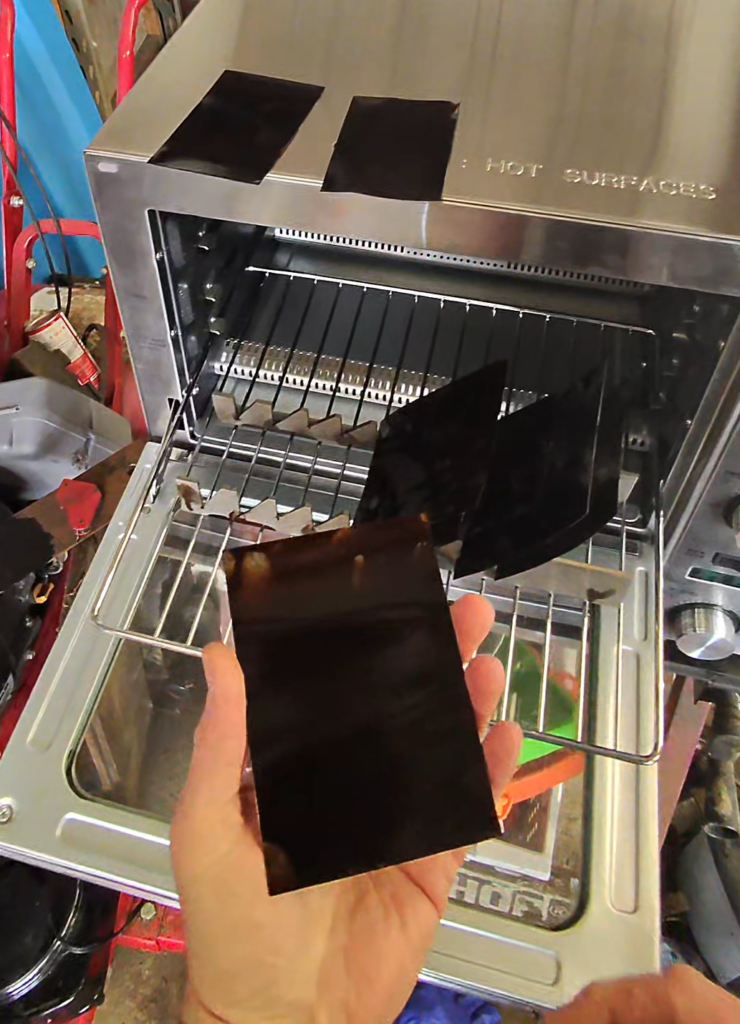
Once I have a can, I cut the top and bottom off and then split the side so the metal can be flattened into a plate.
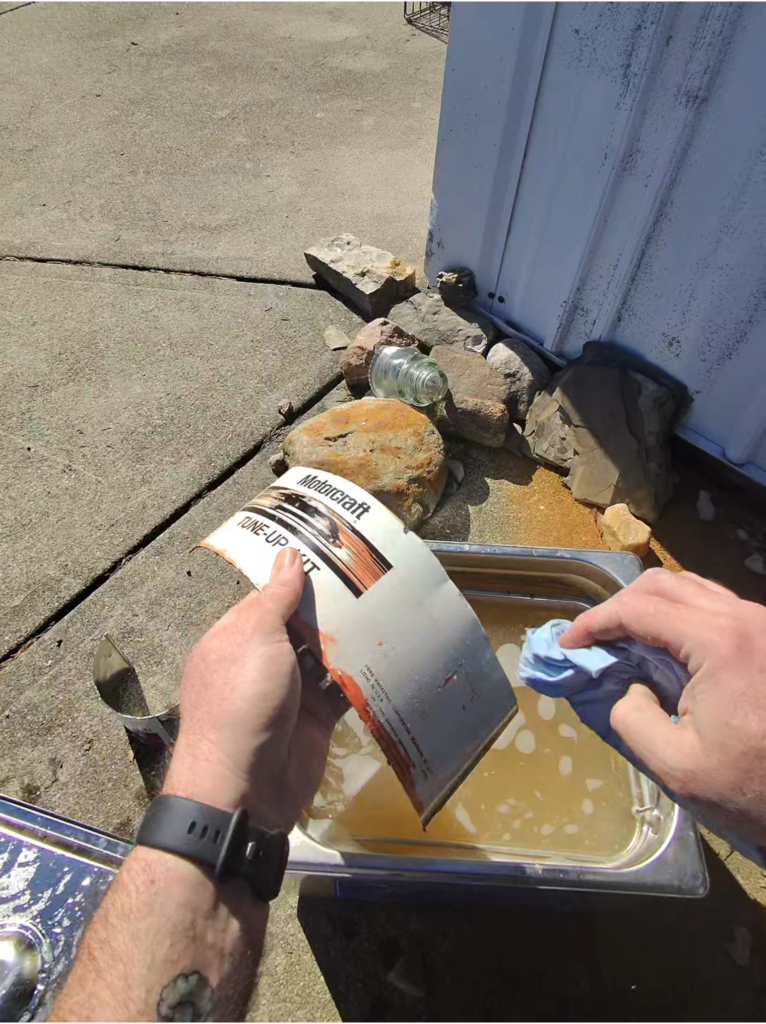
The metal is then thoroughly cleaned in a parts washer to remove any oils or residue that could interfere with the final image.
Trimming the plates
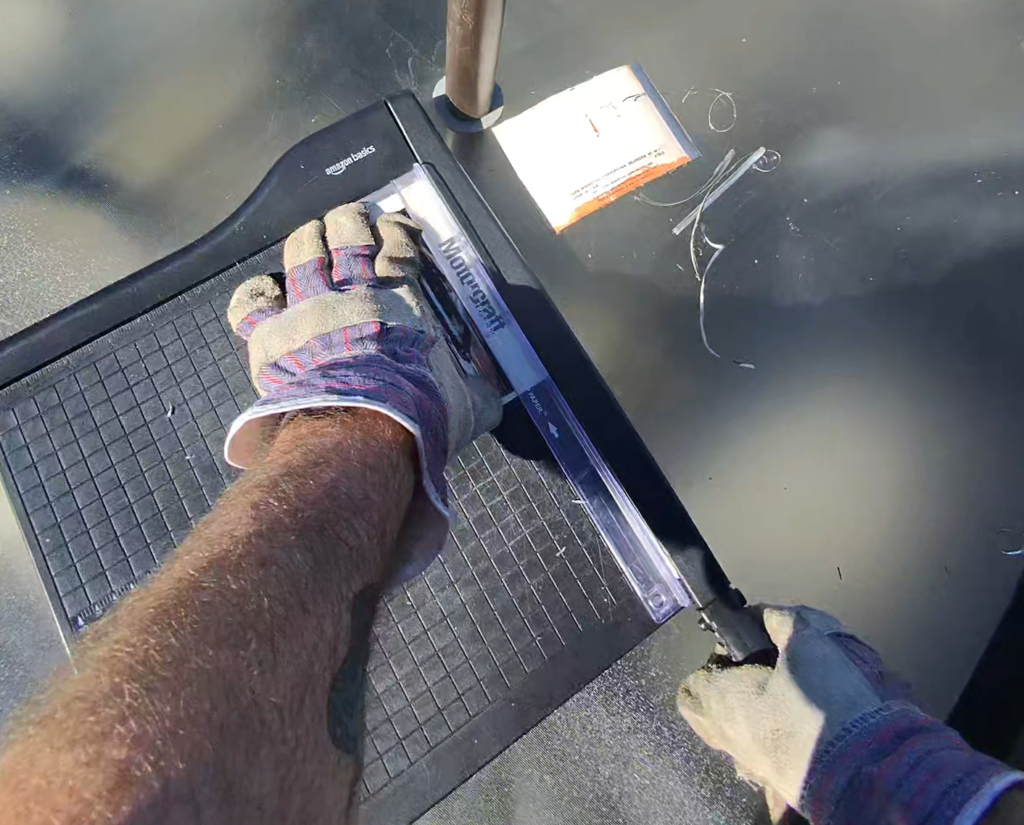
Once the metal is clean and dry, I cut it down into usable sizes.
The height of the cans usually determines what sizes are possible. Most often I can produce 4×5 inch plates, though taller cans can sometimes yield 5×7 plates.
Four-by-five plates tend to be the most common because they come from more standard-sized cans, but the larger plates are always exciting when the material allows for them.
Creating the black background
After the plates are cut and flattened, they need a black surface for the tintype image to appear properly.
This is done using a traditional coating process called Japanning.
“Black Japan” is a historic black varnish that was widely used in the late 1800s and early 1900s. In fact, it was famously used by Ford Motor Company on early Model T parts.
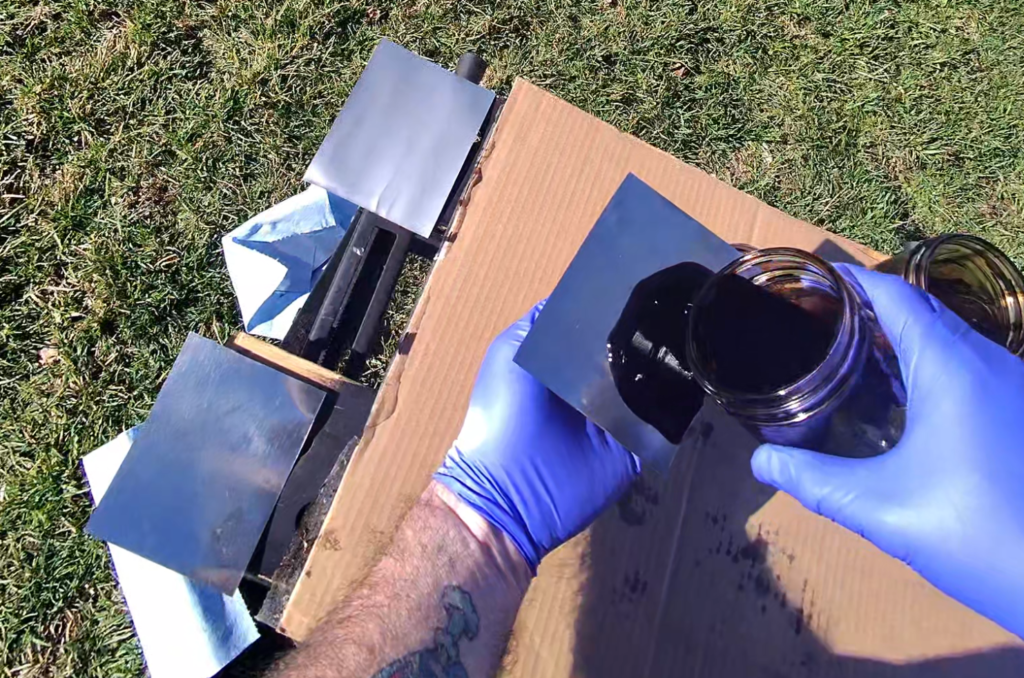
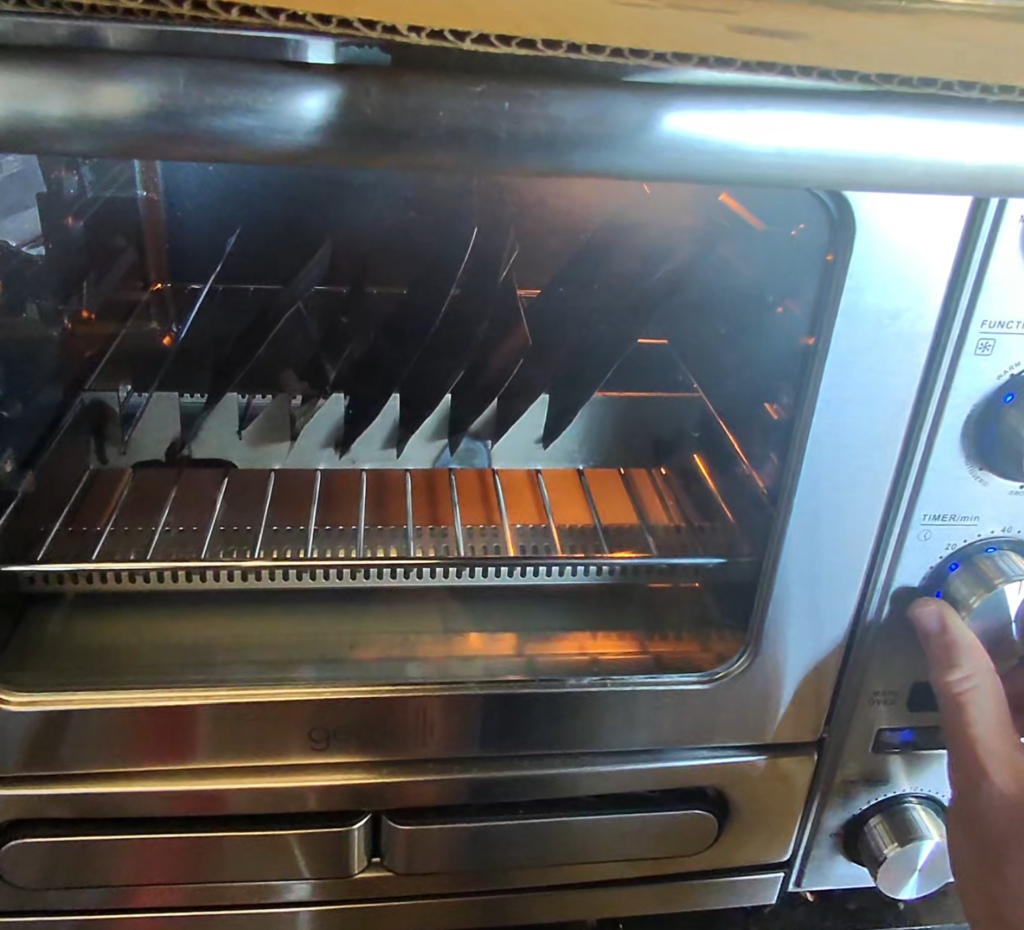
To create this coating, I hand-mix a solution using asphaltum and paint thinner. The mixture is applied to the metal plates and allowed to dry for about an hour.
The plates are then placed into an oven where the coating is baked onto the metal.
Once cooled, additional coats are applied, sometimes two, sometimes three or four, until the plate develops a deep, durable black finish.
Ready for the camera
Once the plates are Japanned and cured, they’re finally ready for the wet plate tintype process.
At that point I can create a one-of-a-kind, hand-crafted photograph on a piece of automotive history.
These reclaimed plates make a unique way to display your vehicle. They can be framed and hung in a basement bar, displayed on a stand in a garage, or placed on a shelf or mantle.
However you choose to display it, each plate becomes a handmade heirloom that celebrates your car and the materials that surround it.
If you’d like to learn more about the process itself, please reach out. I’d be happy to chat!.