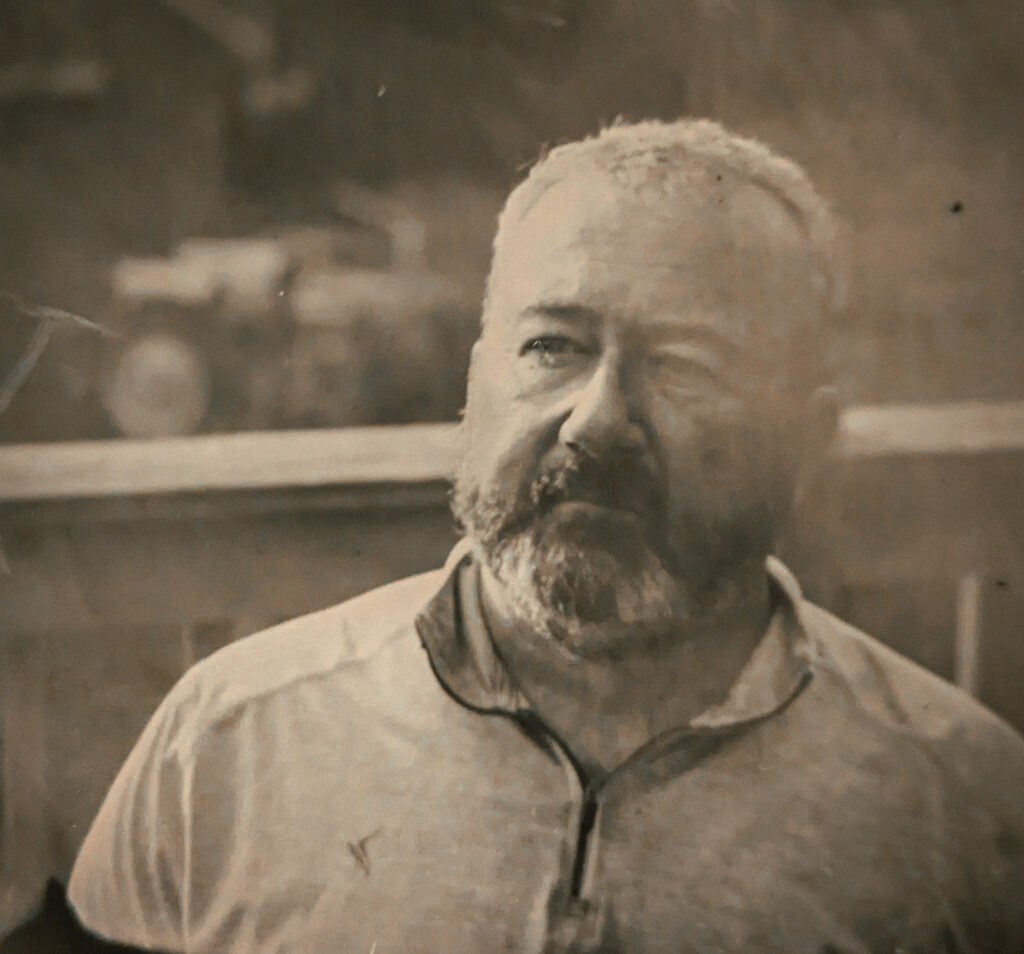
The other day some of the folks at my day job were giving me a hard time because I still didn’t have a profile picture after a year and a half of working there. The truth is, I don’t really enjoy taking self-portraits, so I don’t have many photos of myself that would make a decent profile picture.
I decided if I was going to do it, I might as well do it the hard way and make a tintype self portrait.
To get everything focused, I had my kid stand in for me while I composed the shot. Once focus was set, I marked the floor with tape, so I’d know exactly where to stand. Since there’s a bit of height difference, I ended up kneeling for the final exposure to put myself in the same plane of focus.
While making that plate, I learned a lesson that probably should have been obvious.
I’ve been working with a batch of developer that’s been around for quite a while. Two sessions ago it was still working fine. Maybe a little slower than fresh developer, but nothing that seemed concerning. I already had a new bottle on hand, but I figured I’d keep using the old stuff until it ran out or became noticeably sluggish.
During my last wet plate collodion session, less than a week later, every plate came out completely blank. Solid black. I didn’t have time to troubleshoot, so I packed everything up and moved on.
Today the same thing happened again.
Every tintype plate was coming out blank.
I checked the camera, lens, and shutter. Everything was working correctly. The plate holder looked fine. It didn’t seem likely that the silver nitrate bath or collodion was the culprit. Finally, I decided to stop being stubborn and mix up some fresh developer.
Problem solved.
The next plate developed normally.
What surprised me was how suddenly it happened. I expected the developer to gradually lose effectiveness over time. Instead, it was like a light switch. One day it worked, and a few days later it was completely useless.
So if you’re troubleshooting blank tintypes or wet plate collodion plates that show no image, don’t overlook the obvious. Sometimes the chemistry really is the problem.
In the end, I got my self portrait.
The plate was made on a 4×5 metal tintype using a Kodak Anastigmat 128mm lens in a Kodex No. 1 shutter. Exposure was approximately one second at somewhere between f/6.3 and f/8.
The collodion pour wasn’t my best work, and I think I probably overexposed and overdeveloped the plate. Still, for a profile picture and a bit of a joke, I’m happy with how it turned out.
Sometimes the lesson is more interesting than the photograph.